
Saturday, February 14, 2009

Bipartisanship No, Working Majority Yes
The topic below was originally posted on my blog, the Intrepid Liberal Journal.

In the grown up world, honorable and reasonable people may initially disagree but eventually compromise upon a collective review of empirical evidence. It was in this spirit, that the nascent Obama administration reached out to Republicans with respect to their proposed American Recovery and Reinvestment Act of 2009, which finally passed both houses of congress yesterday.

Unfortunately, most Republican politicians are neither honorable nor reasonable. Instead, most Republican politicians are predatory conservatives dedicated to establishing a permanent corporate theocratic plutocracy. As far as they’re concerned, the 2008 election is merely a temporary setback and attempting bipartisanship with this crowd resulted in legislation far less bold than most economists hoped for.

Hence, it is in the spirit of admiration and support that I urge this new administration to absorb the following lesson: Bipartisanship No, Working Majority Yes. President Obama is a quick study and has likely absorbed this lesson for himself. Indeed, I recall him often using the phrase “working majority” during the campaign. Nonetheless, it is instructive for both liberal activists as well his administration to always keep this simple phrase on the front lobes of our brains. Repeat after me: Bipartisanship No, Working Majority Yes.

This phrase is especially pertinent to the United States Senate. Senators are divas with parochial interests, outsized ambitions and a Constitution that empowers their narcissism. Hence, the only language these people truly understand is leverage with a proper dosage of ego massage. They know that any one of them has the power to hold any piece of proposed legislation hostage to their whims.

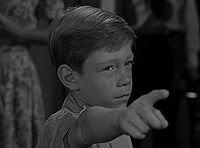
Indeed, senators sometimes behave as if they have the power of little Anthony Freemont in the classic Twilight Zone episode “It’s A Good Life.” Like that little boy, one can just imagine Republican minority leader Mitch McConnell, fantasizing about wishing supporters of universal healthcare into a cornfield never to be seen or heard from again. That is the mentality we’re dealing with.

The upside however is there will always be enough politicians prepared to bargain in order to elevate their own importance, demonstrate independence and serve the interests of their constituents. With respect to the stimulus legislation the three so-called Republican moderate senators were Pennsylvania’s Arlen Specter and Maine’s Olympia Snow and Susan Collins. Connecticut’s “Independent” Republican patsy Joe Lieberman and conservative Nebraska Democrat, Ben Nelson, also joined those three in bargaining with the Obama administration, the Senate majority and the House of Representatives.

Had President Obama initially proposed legislation far bolder they still would have bargained, a filibuster majority still would have been achieved and the end result would have been far superior to the legislation that ultimately passed. Next time around it may be a different group of Republican senators and recalcitrant Democrats doing the bargaining, perhaps related to geographic interests. As long as President Obama’s political standing remains high, it will always be possible to cut deals on favorable terms with a rotating group of senators because their relevance depends upon it.

Hence, a working majority will always be ripe for plucking even without a filibuster proof majority. And even if we had sixty Democratic senators a few of them would threaten denying a filibuster proof majority to promote their independence and get what they want. At the end of the day, bipartisanship has nothing to with it. Leverage, enlightened self-interest, service to constituents or contributors and political survival are everything. There is no love in politics. Only leverage, respect and fear.

The appropriate posture is to treat reluctant politicians with symbolic respect, bargain hard for every penny and compromise from a position of strength. That is the best way to maximize potential of a working majority going forward while simultaneously maintaining broad public support. Sometimes, operating a working majority will require President Obama to demonstrate toughness, walk away and threaten vetoes if a few senators opt to behave like Anthony Freemont in the name of bipartisanship.

Barack Obama is an impressive human being with many admirable qualities. Indeed, Obama represents an ennobling change of pace after George W. Bush’s insipid indecency. He is learning however that governing is delicate balance requiring the dual personalities of Mahtatma Ghandi and Don Vito Corleone. If anyone can achieve that delicate balance it’s this president. Nonetheless, we must remain vigilant and toughen his hide.

Bipartisanship No, Working Majority Yes.

Sunday, February 8, 2009

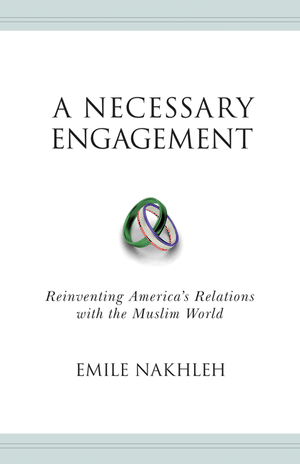
Reinventing America's Relations With the Muslim World: An Interview With Former CIA Analyst Emile Nakhleh

The topic below was originally posted on my blog, the Intrepid Liberal Journal.

Building consensus within America’s body politic and national security establishment for a new way forward with Muslims worldwide is a formidable challenge. Many Americans still don’t appreciate the complex nuances of Muslim society and remain stubbornly Islamophobic almost seven and half years after 9/11. Equally formidable is earning the goodwill of Muslims worldwide following the Iraq War as well as American atrocities perpetrated upon Islamic detainees at Guantanamo Bay and Abu Ghraib. Hopefully, President Obama’s historic election has finally opened a path for constructive conversation about how America can most effectively engage the Muslim world.

The CIA’s former point man on Islam, Emile Nakahleh, has vigorously entered this conversation with his new book, A Necessary Engagement: Reinventing America’s Relations With the Muslim World (Princeton University Press). From 1991 to 2006, Nakahleh served as the director of the Political Islam Strategic Analysis Program in the Directorate of Intelligence at the CIA. He holds a PhD in international relations and is a member of the Council on Foreign Relations.

Nakhleh’s book combines a revealing memoir with in-depth analysis and proposals for the future. Ever since his retirement from the CIA in 2006, Nakhleh has been a vociferous critic of the Bush Administration’s legacy with respect to American-Muslim relations. Indeed, in September 2006, Nakhleh told Harper’s Magazine that because of Bush’s policies,

“We've lost a generation of goodwill in the Muslim world.”
Nakhleh's proposals for improving American-Muslim relations stems from his conversations with Muslim "interlocutors" spanning three decades. These conversations include government ministers, Islamic activists, academics and radicals. Nakhleh also examined and analyzed considerable polling data of Muslims worldwide.

Overall, Nakhleh contends that the vast majority of Muslims and America have common interests and values. His blueprint includes robust dialogue with mainstream Islamic political parties as well as a tangible commitment towards democracy in the Muslim world, even if we don’t always like the short-term electoral results. His book is an accessible 160 pages and divided into four chapters: (Chapter 1) Political Islam and Islamization, (Chapter 2) Intelligence, Political Islam, and Policymakers, (Chapter 3) Public Diplomacy: Issues and Attitudes and (Chapter 4) Public Diplomacy: A Blueprint.

Nakhleh was born in Galilee, north of Nazareth in Palestine and raised a Greek Catholic. He emigrated from Israel to the United States approximately 50 years ago and attended a Benedictine university in Minnesota for his B.A., a Jesuit university in Washington, D.C., for an M.A. and was awarded a Ph.D. from the American University in Washington, D.C. Prior to joining the CIA he taught at a catholic college in Maryland for 26 years.

Nakhleh agreed to a telephone interview with me in podcast format. Among the topics we discussed was whether he believes the surge in Iraq worked, the proxy war between Saudi Arabia and Iran inside Iraq, President Obama’s new strategy in Afghanistan, Hamas and America’s role in resolving the Israeli-Palestinian conflict and his argument that American commitment to democracy in the Muslim world is imperative to our long term interests.

Some of Nakhleh’s answers and views may surprise many listeners. Our conversation was just over 47 minutes. Please refer to the flash media player below.


Either searching for the “Intrepid Liberal Journal” or “Robert Ellman” can also access this interview at no cost via the Itunes Store.

Please note that I erred in the audio introduction when I said Emile Nakhleh worked for the CIA between 1991 and 1996. I mean to say he worked for the CIA between 1991 and 2006. Also my apologies for the echo sound on Emile's side. Sometimes technology has its limits.

Wednesday, February 4, 2009

Black History: The Freedom Rides

Crossposted from Left Toon Lane, Bilerico Project & My Left Wing


click to enlarge
Birth Of A Notion Disclaimer

From Wikipedia:


Civil Rights activists called Freedom Riders rode in interstate buses into the segregated southern United States to test the United States Supreme Court decision Boynton v. Virginia, (1960). The first Freedom Ride left Washington D.C. on May 4, 1961, and was scheduled to arrive in New Orleans on May 17. The significance of Boynton v. Virginia was the outlawing of racial segregation on interstate public transportation. The Freedom Rides consisted of African Americans and whites together riding various forms of public transportation in the South to challenge local laws or customs that enforced segregation. The Freedom Rides, and the violent reactions they provoked, bolstered the credibility of the American Civil Rights Movement and called national attention to the violent disregard for law that was used to enforce segregation in the southern United States. Riders were arrested for trespassing, unlawful assembly, and violating state and local Jim Crow laws, along with other alleged offenses.

Most of the subsequent rides were sponsored by the Congress of Racial Equality (CORE) while others belonged to the Student Nonviolent Coordinating Committee (SNCC, pronounced Snick). The Freedom Rides followed on the heels of dramatic "sit-ins" against segregated lunch counters conducted by students and youth throughout the South, and boycotts beginning in 1960.

The United States Supreme Court's decision in Boynton v. Virginia granted travelers the legal right to disregard local segregation ordinances regarding interstate transportation facilities. But the Freedom Riders' rights were not enforced and were considered criminal acts throughout most of the South. For example, upon the Riders' arrival in Mississippi, their journey ended with imprisonment for exercising their legal rights in interstate travel, and similar arrests took place in other southern cities. Freedom Riders knew that they faced arrest by authorities determined to stop their protests and possible mob violence and before starting they committed themselves to a strategy of non-violent resistance.

The Freedom Riders faced much resistance against their cause, but ultimately received strong support from people both inside and outside the South for their efforts.

The Freedom Riders were inspired by the 1947 Journey of Reconciliation, led by civil rights activists Bayard Rustin and George Houser. Like the Freedom Rides of 1961, the Journey of Reconciliation was intended to test an earlier Supreme Court ruling that banned racial discrimination in interstate travel. Rustin and a few of the other riders, chiefly members of Congress of Racial Equality (CORE), were arrested and sentenced to serve on a chain gang in North Carolina for violating local Jim Crow laws regarding segregated seating on public transportation.

The first Freedom Ride began on May 4, 1961. Led by CORE Director James Farmer, 13 riders (seven black, six white) left Washington DC on Greyhound and Trailways buses. Their plan was to ride through Virginia, the Carolinas, Georgia, Alabama, and Mississippi, ending with a rally in New Orleans, Louisiana. Most of the Riders were from CORE, and two were from SNCC. Many were in their 40s and 50s.

Only minor trouble was encountered in Virginia and North Carolina, but John Lewis was attacked in Rock Hill, and some of the Riders were arrested in Charlotte NC and Winnsboro SC.

In Anniston, Alabama, a mob attacked the Greyhound bus and slashed its tires. When the crippled bus had to stop several miles outside of town, it was firebombed by the mob chasing it in cars. As the bus burned, the mob held the doors shut, intent on burning the riders to death. An exploding fuel tank caused the mob to retreat, allowing the riders to escape the bus. The riders were viciously beaten as they fled the burning bus, and only warning shots fired into the air by highway patrolmen prevented the riders from being lynched.

That night, the hospitalized Freedom Riders, most of whom had been refused care, were kicked out of the hospital at 2 AM because the staff feared the mob outside the hospital. Local civil rights leader Rev. Fred Shuttlesworth organized several cars of blacks who defied the mob to rescue the injured Freedom Riders.

When the Trailways bus reached Birmingham, it too was attacked by a mob of Ku Klux Klan members aided and abetted by the police under the orders of Commissioner Eugene "Bull" Connor. As the riders exited the bus, they were mercilessly beaten by the mob with baseball bats, iron pipes and bicycle chains. Among the Klansmen attacking the riders was FBI informant Gary Thomas Rowe. White Freedom Riders were particularly singled out for frenzied beatings. Two riders were hospitalized, including white Freedom Rider Jim Peck, who required 52 stitches to close the wounds in his head.

When reports of the bus burning and beatings reached US Attorney General Robert Kennedy, he urged restraint on the part of Freedom Riders and sent an assistant, John Seigenthaler, to Alabama to try to calm the situation.

With all of the original Freedom Riders injured, and the Trailways and Greyhound drivers afraid to drive any bus containing Freedom Riders, it was suggested that the Freedom Rides be discontinued. Most of the original Freedom Riders flew to New Orleans to attend a previously scheduled rally.

Nashville student and SNCC leader Diane Nash felt that if violence were allowed to halt the Freedom Rides, the movement would be set back years. She pushed to find replacements to resume the ride, and on May 17th a new set of riders, students from Nashville, took a bus to Birmingham where they were arrested by Bull Connor and jailed. These students kept their spirits up in jail by singing Freedom Songs. Out of frustration, Connor drove them back up to the Tennessee line and dropped them off, stating "I just couldn't stand their singing." They immediately returned to Birmingham.

The Freedom Riders who had answered SNCC's call from across the Eastern US joined John Lewis and Hank Thomas, the two young SNCC members of the original Ride who had remained in Birmingham. On May 19, they attempted to resume the ride, but terrified by the howling mob surrounding the bus depot, the drivers refused. Harassed and besieged by the KKK mob, the riders waited all night for a bus.

Under intense public pressure from the Kennedy administration, Greyhound was forced to provide a driver and Alabama Governor John Patterson reluctantly promised to protect the bus from KKK mobs and snipers on the road between Birmingham and Montgomery, after direct intervention from Attorney General's office employee Byron White. On the morning of May 20, the Freedom Ride resumed, with the bus carrying the riders travelling toward Montgomery at 90 miles an hour protected by a contingent of the Alabama State Highway Patrol.

However, when they reached the Montgomery city limits, the Highway Patrol abandoned them. At the bus station, a huge white mob was waiting and viciously beat the Freedom Riders with baseball bats and iron pipes. The local police allowed the beatings to go on uninterrupted. Again, white Freedom Riders, branded "nigger-Lovers," were singled out for particularly brutal beatings. Reporters and news photographers were also attacked and their cameras destroyed, but there is a famous picture taken later of Jim Zwerg in the hospital, beaten and bruised. Justice Department official Seigenthaler was beaten and left unconscious lying in the street. Ambulances refused to take the wounded to the hospital. Local blacks rescued them, and a number of the Freedom Riders were hospitalized.

The following night, Sunday May 21st, more than 1200 people packed Reverend Ralph Abernathy's 1st Baptist church to honor the Freedom Riders. Among the speakers were Martin Luther King, Jr., Rev. Fred Shuttlesworth, and James Farmer. Outside, an enormous mob of more than 3,000 whites attacked blacks and the handful of federal marshals protecting the church from assault and fire bombs. With city and state police making no effort to restore order, President Kennedy threatened to commit federal troops, but Governor Patterson forestalled that by ordering the Alabama National Guard to disperse the mob.

The next day, Monday May 22, more Freedom Riders from CORE and SNCC arrived in Montgomery to continue the rides and replace the wounded riders still in hospital. Behind the scenes, the Kennedy administration arranged a deal with the governors of Alabama and Mississippi. The governors agreed that state police and National Guard would protect the Riders from mob violence (thereby ending embarrassing media coverage of bloody lawlessness), and in return the federal government would not intervene to stop local police from arresting Freedom Riders for violating segregation ordinances when the buses arrived at the depots (even though such arrests violated the Supreme Court's Boynton decision).

On Wednesday morning, May 24, Freedom Riders boarded buses for the journey to Jackson, Mississippi. Surrounded by Highway Patrol and National Guard, the buses arrived in Jackson without incident, and the riders were immediately arrested when they tried to use the "white-only" facilities at the depot. In Montgomery, Freedom Riders including Yale University chaplain William Sloane Coffin, Shuttlesworth, Abernathy, Wyatt Tee Walker, and others were similarly arrested for violating local segregation ordinances.

This established a pattern followed by subsequent Freedom Rides in which they traveled to Jackson, where they were arrested and jailed. The strategy became one of trying to fill the jails. Once the Jackson and Hinds County jails were filled to overflowing, Freedom Riders were transferred to the infamous Parchman Penitentiary ("Parchman Farm"). Their abusive treatment included placement in the Maximum Security Unit (Death Row), issuance of only underwear, no exercise, no mail, and, when Freedom Riders refused to stop singing Freedom Songs, they took away mattresses, sheets and toothbrushes and removed the screens from the windows. When the cell block became filled with mosquitoes, they hosed everyone down with DDT at 2 AM.

Several members from CORE and SNCC joined the Freedom Rides; among them was Stokely Carmichael, who later became the chairman of the SNCC. He was jailed several times while in Mississippi for participating in the freedom rides, with one sentence of 49 days in the Mississippi Parchman Penitentiary. Later he became the leader of the Black Panther Party, which was a sharp contrast from the non-violent campaign held by SNCC and CORE. Stokley Carmichael was diagnosed with colon cancer later on and eventually died. He claimed that the government was behind his death.

Ruby Doris Smith Robinson, a civil rights leader born in Atlanta, was another member from the SNCC who joined the Freedom Rides. She was arrested in Mississippi and after her release remained in the area to work on the voter registration project. In 1967 she died from cancer. Like Stokley Carmichael's death there was talk amongst members of the SNCC that the government was somehow responsible.

James Peck, the editor of CORE's magazine, was the only person to participate in both the Freedom Rides and the Journey of Reconciliation. He rode through Alabama and was subject to a vicious beating from the mobs. He filed for suit against the FBI because they were aware of the violence, and he won. He was a well-respected civil-rights activist and later died of a stroke.

James Farmer, who was CORE’s director, launched the Freedom Rides in the south to end segregation on interstate buses. He was subsequently jailed along with the other freedom riders. By the age of 21, Farmer was able to accomplish all that he had hoped regarding desegregation on interstate transportation.

The Kennedys called for a "cooling off period" and condemned the Rides as unpatriotic because they embarrassed the nation on the world stage. Attorney General Robert Kennedy — the chief law enforcement officer of the land — was quoted as saying that he "Does not feel that the Department of Justice can side with one group or the other in disputes over Constitutional rights."

Defying the Kennedys, CORE, SNCC, and SCLC rejected any "cooling off period." They formed a Freedom Riders Coordinating Committee to keep the Rides rolling through June, July, August, and September. During those months, more than 60 different Freedom Rides criss-crossed the South, most of them converging on Jackson where every Rider was arrested, more than 300 in total, plus an unknown number of riders arrested in other southern towns. It is estimated that almost 450 riders participated in one or more Freedom Rides. About 75% were male, and the same percentage were under the age of 30, mostly evenly divided between black and white.

During the summer of 1961, Freedom Riders also campaigned against other forms of racial discrimination. They sat together in segregated restaurants, lunch counters and hotels. This was especially effective when it targeted large companies which, fearing boycotts in the North, began to desegregate their businesses.

In mid-June, a group of Freedom Riders were scheduled to end their ride in Tallahassee, Florida, with plans to fly home from the Tallahassee airport. They were provided a police escort to the airport from the city's bus facilities. At the airport, they decided to eat at a restaurant that was signed "For Whites Only". The owners decided to close, rather than serve the Freedom Riders. Although the restaurant was privately owned, it was leased from the county government. Canceling their plane reservations, the Riders decided to wait until the restaurant re-opened so they could be served. They waited until 11:00 pm that night, and returned the following day. During this time, hostile crowds gathered, threatening violence. On June 16th, 1961, the Freedom Riders were arrested in Tallahassee for unlawful assembly. That arrest became known as Dresner v. City of Tallahassee, which made its way to the US Supreme Court in 1963, in which a hearing was refused, based on technical reasons.

Eventually, bowing to public opinion, the Kennedy administration got the Interstate Commerce Commission (ICC) to issue yet another desegregation order. The ICC was reluctant, but in September 1961 it issued the necessary orders, and the new policies went into effect on November 1, 1961. After the new ICC rule took effect, passengers were permitted to sit wherever they pleased on interstate buses and trains, "white" and "colored" signs came down in the terminals, separate drinking fountains, toilets, and waiting rooms were consolidated, and the lunch counters began serving people regardless of race.

The Freedom Rides established great credibility with blacks and whites throughout the United States who became motivated to engage in direct action for civil rights. Perhaps most significantly, Freedom Riders, facing such danger on their behalf, impressed blacks living in rural areas throughout the South who later formed the backbone of the civil rights movement. This credibility inspired many subsequent civil rights campaigns, including voter registration, freedom schools, and the black power movement.


BIRTH OF A NOTION WALLPAPER is now available for your computer. Click here.

Tuesday, February 3, 2009

Blogroll Amnesty Day 2009

On Saturday afternoon, I received the following e-mail from Jon Swift. Had every intention of reading it right away when I got home, but after spending a long day trying to keep up with my 13 year old daugther and her best friend at Ohayocon, I was too mentally and physically exhausted to remember anything by the time I got home. Anyway, better late than never, I hope...

Please join me, skippy, Blue Gal and a number of our friends in celebrating Blogroll Amnesty Day this year. The official holiday is February 3 but we'll be celebrating from now until Tuesday. Blogroll Amnesty Day is a day when we celebrate smaller blogs by linking to a few that deserve some recognition. Here are a few links explaining what this holiday is about:

Blogroll Amnesty Day Redux


Bad Days Are Here Again

Blogroll Amnesty Day is Next Tuesday

And here is some more background if you're not familiar with the history of this day:

Blogroll Amnesty Day

If you post something about the day email me or skippy at skippybkroo@aol.com and let us know.

Happy Blogroll Amnesty Day!

Jon Swift

P.S. Here's a link to the Blogroll Amnesty Day blog I set up back when, to paraphrase Philip J. Fry, I used to feel ways about stuff. Sorry I've been missing in action, but things have been, well--I think "interesting" is the nice way to say it.

P.P.S. I think (hope) I may have fixed a problem with the page layout here.

Monday, February 2, 2009

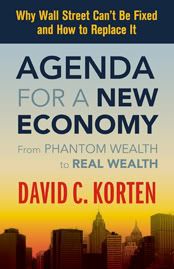
America, It's Time To Say Goodbye To Wall Street: An Interview With Author David Korten

The topic below was originally posted on my blog, the Intrepid Liberal Journal.

“We face a monumental economic challenge that goes far beyond anything being discussed in the U.S. Congress or the corporate press. The hardships imposed by temporarily frozen credit markets pale in comparison to what lies ahead.

Even the significant funds that the Obama administration is committed to spending on economic stimulus will do nothing to address the deeper structural causes of our threefold financial, social, and environmental crisis. On the positive side, the financial crisis has put to rest the myths that our economic institutions are sound and that markets work best when deregulated. This creates an opportune moment to open a national conversation about what we can and must do to create an economic system that can for work for all people for all time.”
Internationally renowned social scientist and historian David Korten wrote those words in the introduction of his new book, Agenda For A New Economy: From Phantom Wealth To Real Wealth, scheduled to be released by Berrett-Kohler Publishers tomorrow.

Some of you may have previously read Korten’s 1995 international bestseller, When Corporations Rule the World. Longtime readers/listeners of the Intrepid Liberal Journal may also recall my August 2007 podcast interview with Korten about his book, The Great Turning: From Empire To Earth Community. You can learn more about Korten’s background by clicking here and reading the introductory text to that podcast.

Korten’s current book is organized in four parts: Part I, The Case for a New Economy; Part II, The Case for Eliminating Wall Street; Part III, Agenda for a Real Wealth Economy and Part IV, Change the Story, Change the Future. Essentially, Korten divides the economy into “Wall Street” and “Main Street.” The first half of Korten’s book is dedicated to indicting Wall Street for generating “phantom wealth” at the expense of society’s quality of life. In the second half, Korten promotes twelve concepts to empower a “Main Street” economy that facilitates the exchange of tangible goods and services among citizens living within their means.

His diagnosis and prescriptions are jarring. Korten postulates that Main Street is far closer to the original vision of Adam Smith while Wall Street capitalism is the antithesis of a free market economy. Reform-minded liberals, who believe we can work within America’s established financial credit markets banking system and stabilize our economy with band-aids and bailouts, will likely be just as opposed to his book as Wall Street apologists. Conservatives will likely dismiss Korten’s solutions because he believes in government regulation to ensure that businesses and citizens behave within agreed upon social norms.

As Korten sees it, corporations in a Wall Street economy are given incentives to destroy the planet’s environment and inflate its financial statements by taking a wrecking ball to the middle class. In a true market economy, business entities that inflict harm on the environment and their community’s overall quality of life could not survive. Hence, Korten writes that under a Wall Street economy, corporations,
“If it were a real person, it would fit the clinical profile of a sociopath.”
Sadly, in American society, sociopathic behavior was rewarded as the proper spoils of capitalism. Hence, one of Korten’s twelve concepts to empower a Main Street economy is to “Reclaim the corporate charter” so that the public has a means of ensuring accountability and social responsibility.

The future that Korten envisions is a community ethos in which citizens and businesses have a stake in the health, infrastructure and overall quality of life in their local community as well as the world at large.

Vicki Robin, coauthor of Your Money or Your Life and cofounder of Conversation Cafes issued the following praise for Korten’s book:
“Once again David Korten has provided us with a clear understanding of why the old economy is driving us and nature to ruin - and a framework for transforming it. Especially in this time of economic meltdown it's crucial for caring people everywhere to get that patching the tires of a vehicle that's going over a cliff is neither sane nor acceptable. The financial crisis is a healing crisis and Korten gives us prescriptions that could actually give us a thriving and just economy that works for people and the planet. I hope every reader feels, as I have, a sense of relief at hearing the truth and a renewed passion for civic engagement, now knowing what direction we need to steer our ship."
Korten agreed to a podcast interview with me over the telephone yesterday afternoon about his latest book, why he believes the Wall Street economy is irredeemable and his solutions for the future. Our conversation was approximately forty-two minutes. Please refer to the flash media player below.


Either searching for “Intrepid Liberal Journal” or “Robert Ellman” can also access this interview at no cost via the Itunes Store.