






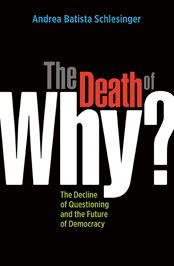
“Why is the first question most children ask. With this question we express, to the delight and chagrin of our parents, our power.Although only thirty-two, Schlesinger has operated in the arena of policy debates locally in New York City and nationally for over a decade. Since 2002, Schlesinger has applied her background in public policy, politics, and communications to transform the Drum Major Institute (“DMI”) into a progressive policy think tank with national impact. During her tenure as Executive Director, DMI created its Marketplace of Ideas series which highlights successful progressive policies from across the country and launched two public policy blogs that reach several thousand readers a day; and embarked on a national program to nurture careers in public policy for college students from underrepresented communities. Recently, Schlesinger took a leave of absence from DMI to serve as a senior policy adviser to the re-election campaign of New York City mayor Michael R. Bloomberg – a decision that is controversial among New York City liberals like myself. Prior to joining DMI, Schlesinger directed a national Pew Charitable Trusts campaign to engage college students in discussion about the future of Social Security and served as the education adviser to Bronx borough president and mayoral candidate Fernando Ferrer. The one life lesson Schlesinger has learned above all others in her career and promotes passionately her book is that questions equals power. It is Schlesinger’s contention that our culture promotes instant answers at the expense of inquiring. With this book, Schlesinger has four primary objectives: 1) Convince readers of the importance of inquiry in our democracy 2) Illustrate how the very institutions that should be encouraging inquiry such as schools, the media, and government, the Internet are instead undermining intellectual curiosity in our society; 3) Inspire readers with hopeful examples of people working to restore inquiry to its rightful place of importance; 4) Convey a sense of urgency among citizens to develop effective “habits of the mind” and not be easily seduced by instant easy sound bite answers to complex challenges such as global warming. Death of Why, is a well researched and scrupulously sourced eleven chapters and 215 pages of text. Where Schlesinger’s book is especially provocative is when she takes bloggers like me to task for engaging in robotic group-think and avoiding engagement with people possessing different viewpoints. Former New York Governor Mario Cuomo said that, "The road to wisdom is asking 'why'? Andrea Batista Schlesinger has been asking 'why?" and supplying her own bright and thoughtful answers for long enough so that some of us suggested she write a book. It's foruntate for all of us that her answer was 'why not!'"The publisher of The Nation, Kathleen vanden Heuvel added that, "From her start in politics as a teenager Andrea Batista Schlesinger has asked the important questions. Now she asks her most important: are we teaching young people to value inquiry, and if not, what hope can we have for the future of democracy?"Schlesinger graciously agreed to a telephone podcast interview with me this afternoon about her book. She was engaging and assertive in a conversation that was just over forty-six minutes. Among the topics discussed and debated is her contention that we’re ideologically segregated, her argument that the Internet has reinforced a destructive group think mentality in our society, her advocacy for civics education and objection to teaching “financial literacy” in public schools and we closed by discussing her decision to join Mayor Bloomberg’s re-election campaign as a senior policy adviser. Please refer to the flash media player below. This interview can also be accessed at no cost via the Itunes Store by either searching for the “Intrepid Liberal Journal” or “Robert Ellman.” |
Sunday, July 19, 2009
The Death of Why?: An Interview With Author Andrea Batista Schlesinger


Mormon Mysteries #549
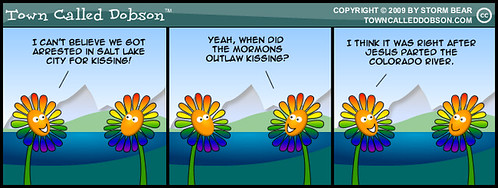 click to enlarge I guess this is a bad time to admit I am a big fan of HBO's Big Love? |
Sunday, July 12, 2009
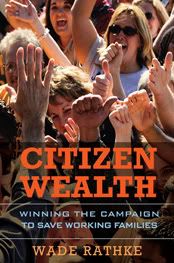
The Ultimate Organizer: An Interview With ACORN's Founder Wade Rathke
“We need to create a national economic and political consensus that increasing family income, wealth and assets is not `welfare’ or an entitlement ‘give-away’ program but an investment in the public good and well-being.”His book is an accessible thirteen chapters and 171 pages of text presenting his blueprint to organize regular folks to win economic and political power. Rathke’s book also contains revealing anecdotes about ACORN’s negotiations with corporate entities such as H&R Block and their bank, HSBC, to end the predatory practice of Refund Anticipation Loans. Perhaps the most compelling topic in his book is covered in chapter nine when Rathke laments how millions of citizens eligible for Food Stamps, Medicaid and the State Children Health Insurance Program (“SCHIP”) are disenfranchised from participating in the very programs designed to help them. Rathke has remained involved with organizing activities after leaving ACORN in 2008. He is the founding board member of the Tides Foundation as well as the chief organizer of SEIU Local 100 in New Orleans and publisher of Social Policy magazine. He posts regularly at the Chief Organizer blog. Rathke agreed to a telephone podcast interview with me about his book and among the topics covered is the meaning of citizen wealth, why economic justice has lagged behind expanded civil liberties for minorities and women, the methodology of ACORN’s approach to fight H&R Block’s predatory practices of Refund Anticipation Loans, the criticisms ACORN and the Community Reinvestment Act have received about the housing crisis and his belief that worker/labor organization is imperative for all segments of society. Our conversation was twenty-eight and a half minutes. Please refer to the flash media player below. This interview can also be accessed at no cost the Itunes Store by searching for either the “Intrepid Liberal Journal” or “Robert Ellman.” |
Saturday, July 4, 2009
How the Palin 2012 Campaign Will Look
 click to enlarge This strip pretty much sums up my thoughts on the issue. |
Friday, July 3, 2009
Cool, Suave & Sophisticated
|

Subscribe to:
Posts (Atom)